
What actually helps with hemorrhoids?
A practical look at common treatments, home care, and when it's worth seeing a doctor.
By ahem. Published October 24, 2026.
What this page is
This is general information for adults, drawn from two public medical pages. It is not a diagnosis, a brand comparison, or a reason to skip a clinician. ahem has not tested hemorrhoid products and does not sell one.
Rectal bleeding is not automatically a hemorrhoid. If you are trying to work out what your own symptoms are, a person who can examine you is the right next step. The sources below are linked so you can read them yourself.
Creams, ointments, and suppositories
NIDDK says over-the-counter hemorrhoid creams, ointments, or suppositories may relieve mild pain, swelling, and itching of external hemorrhoids. A suppository, in NIDDK's wording, is a medicine you insert into your rectum. NIDDK says doctors most often recommend using these over-the-counter products for about a week. Follow up with a doctor if they do not help after a week, or if they cause side effects such as dry skin or a rash.
Mayo Clinic describes a similar set of home treatments: a hemorrhoid cream or suppository containing hydrocortisone, pads containing witch hazel, or a numbing medicine. Mayo Clinic says hydrocortisone is a steroid that can thin the skin when it is used for more than a week, and says to ask a health professional how long to use it.
Labels differ by product. The package is the instruction sheet for the specific item in your hand. This page is not.
Warm water
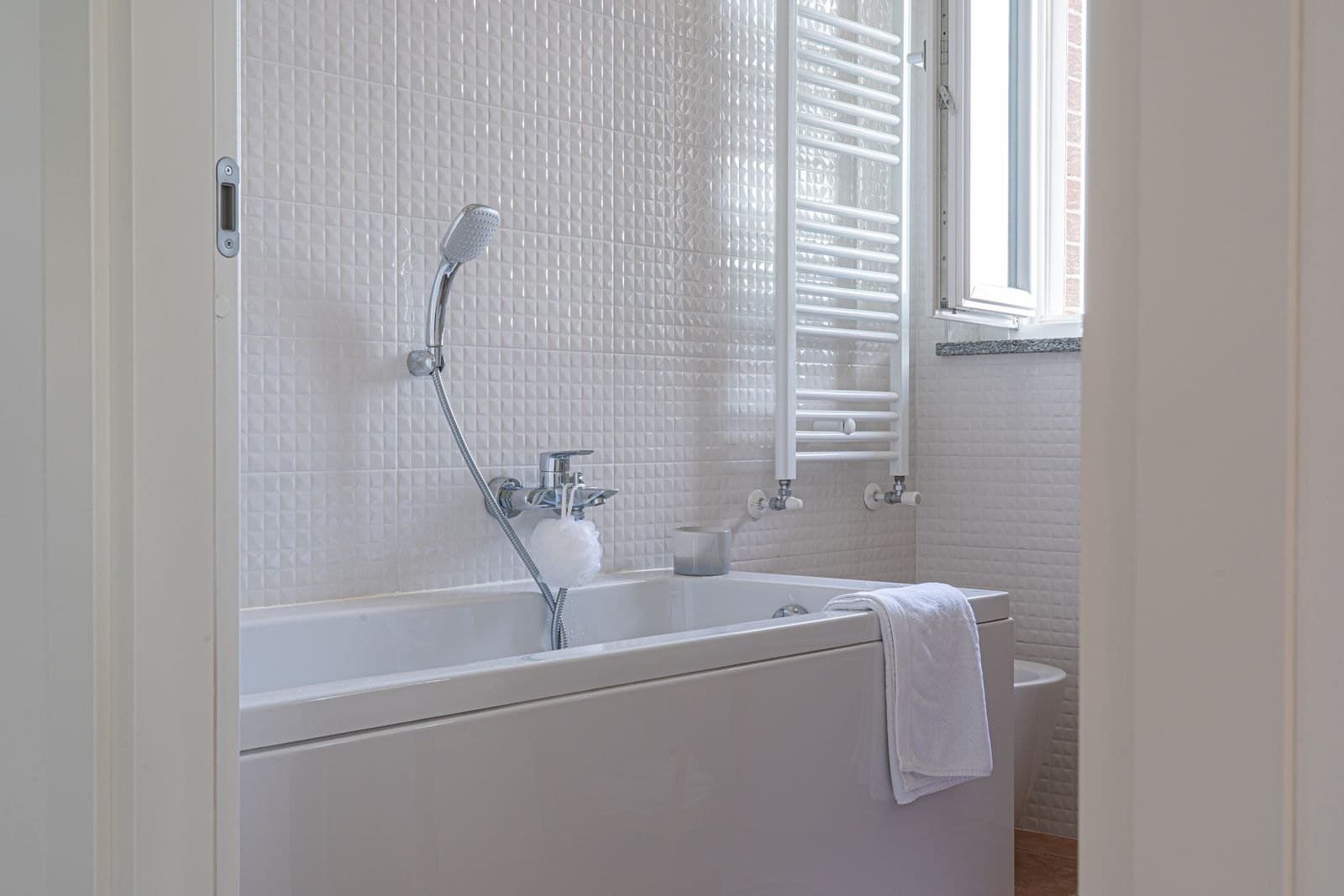
Both sources describe sitting in warm water, often called a sitz bath, as a way to ease pain. Mayo Clinic suggests plain warm water for 10 to 15 minutes, two or three times a day. A sitz bath can be a bathtub, or a basin that fits over the toilet. NIDDK lists a warm bath several times a day among the home-care steps, next to fiber, fluids, and less straining.
The rest of the home-care list
NIDDK's home-care list is not only products you rub on or insert. It also includes:
- Eating foods that are high in fiber.
- A stool softener, or a fiber supplement such as psyllium or methylcellulose.
- Drinking water or other nonalcoholic liquids, as a clinician recommends.
- Not straining during bowel movements, and not sitting on the toilet for long periods.
- Over-the-counter pain relievers such as acetaminophen, ibuprofen, naproxen, or aspirin.
Mayo Clinic gives similar diet advice and says to add fiber slowly, because a sudden increase can cause gas. Those are published suggestions for a general reader. They are a poor substitute for advice that accounts for your other medicines and conditions. Some pain relievers are a bad fit for some people.
When to get care
NIDDK says to seek medical care right away for severe anal pain and bleeding from the rectum, particularly with discomfort or pain in the abdomen, diarrhea, or fever.
Mayo Clinic says hemorrhoid symptoms often go away within a week with these home treatments. It also says to see a health professional if you do not get relief after a week, and sooner if you have severe pain or bleeding.
NIDDK also notes that most prolapsed internal hemorrhoids go away without at-home treatment, while severely prolapsed or bleeding internal hemorrhoids may need medical care. This page does not describe office procedures or surgery. NIDDK's treatment page does, and those decisions belong with a clinician.
Sources
- Treatment of Hemorrhoids. National Institute of Diabetes and Digestive and Kidney Diseases. Accessed October 24, 2026. NIDDK last reviewed this page in October 2016.
- Hemorrhoids: Diagnosis and treatment. Mayo Clinic. Accessed October 24, 2026. Mayo Clinic dates this page August 23, 2025.
General information, not personal medical advice. We have not compared brands. If this disagrees with a label you already have, follow the label.